
Quick answer: WiiM is a streaming company that also builds amplifiers — and every buying decision in the line comes from keeping those two facts apart. The Pro Plus streamer ($249.00) is the pick if your amplifier is already good: it’s the cheapest, smartest way to bolt modern streaming onto a system you love. The Amp Pro ($399.00) replaces a dead receiver with streaming excellence and mid-fi amplification. The Amp Ultra ($549.00) is the TV-first version with one categorical flaw — no AirPlay, ever. The app is the best in the budget-audio business; the amps are conveniences, not upgrades over good vintage gear.
The three-product lineup
Two integrated streaming amps and one pure streamer — one ecosystem, three doors. Prices are feed values at time of writing.

WiiM Amp Pro streaming amplifier
The product that made WiiM a word-of-mouth brand in hi-fi: a 100W-per-channel Class D amp with the whole streaming stack built in — AirPlay 2, Chromecast, Spotify Connect, Tidal Connect, Roon Ready — plus HDMI ARC for the TV and a subwoofer out. Its 4.6 stars across 2,364 ratings is the deepest pool of the three, and the pattern is unmistakable: people replacing dead receivers and $8,000 proprietary multi-room preamps with one $399 box per room. The honest split in the same pool: the streaming and app side is genuinely excellent; the amplifier section is mid-fi, and owners with good vintage amps hear the difference immediately.
- 100W × 2 into passive speakers — documented driving Klipsch, B&W 706, Emotiva towers
- HDMI ARC + sub out + phono-adjacent I/O — the TV-and-turntable household’s one-box answer
- full streaming stack + room correction — the app is the product’s most praised feature, by far
- mesh-network friction — one owner needed Ethernet before setup would complete

WiiM Amp Ultra
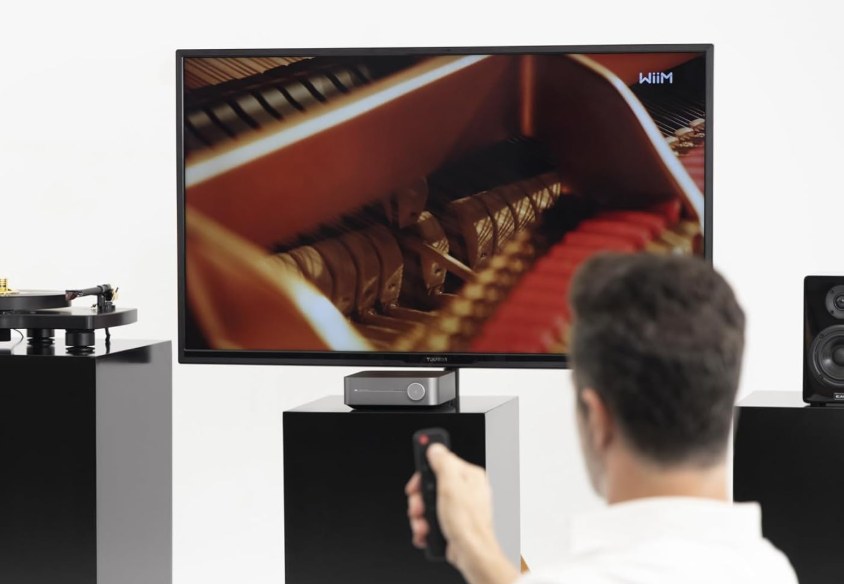
The Amp Pro’s bigger sibling: more power headroom, a color touchscreen, aluminum rechargeable remote, RoomFit room correction and the same HDMI ARC-eARC path. Its pool is smaller (857 ratings, 4.6) and skews toward TV-first buyers who wanted the ARC experience to be seamless — which, on modern sets, it demonstrably is. The two documented dealbreakers are categorical, not marginal: no AirPlay at all (a hardware limitation that firmware will never fix, per the 3-stars), and the same amp-vs-vintage argument as the Amp Pro, one price tier higher.
- touchscreen + metal rechargeable remote — the parts owners single out as feeling premium
- eARC without handshake drama — verified on TCL, Sony and LG sets in the pool
- RoomFit room correction — takes fiddling; owners with small rooms report modest gains
- no AirPlay, period — hardware-locked omission the 3-star reviews are blunt about

WiiM Pro Plus music streamer
The pick for people whose amplifier is already good: the Pro Plus is a streamer-DAC, not an amp. It feeds your existing receiver or powered speakers over optical, coax or RCA, brings the whole WiiM streaming stack and app, and adds a remote — the detail that sleep-time listeners and Sonos refugees specifically praise. At 4.2 stars across 2,924 ratings it is the lowest-scored of the three, for documented reasons: a plastic shell that feels beneath the price, a tight power connector, and a sprinkling of units that died young (support replaced them). The value case is the strongest in the line: the cheapest door into the ecosystem.
- feeds the amp you already love — the anti-upgrade path — vinyl and vintage households take it
- remote + Spotify/Tidal Connect — the Sonos-replacement argument, made by actual Sonos refugees
- optical + coax + RCA out — one reviewer uses it as a bridge into a $10k external DAC
- 4.2 · 2,924 ratings — plastic build and early-unit failures drag the average
Who each WiiM is for
WiiM’s October lineup is one ecosystem at three entry points. The dividing question is always the same: what does the stereo you already own deserve?
The receiver-replacement household — Amp Pro ($399.00)
A dead or dying receiver, or a first real system, or one room of a multi-room retrofit. Streaming, app and room correction are all class-leading; the amp is competent rather than exceptional. If your speakers are easy to drive, this is the best value in the line.
The TV-first living room — Amp Ultra ($549.00)
The TV is the source, ARC/eARC is the path, and a screen on the box plus a metal remote are worth $150 to you. Same streaming excellence, more power headroom. Two categorical dealbreakers: no AirPlay (hardware, forever), and the same mid-fi amp ceiling.
The happy-amplifier owner — Pro Plus ($249.00)
Your amp or receiver is good and staying. The Pro Plus is the $249 brain transplant: full streaming stack, remote, digital outs into whatever DAC or amp you love. The cheapest door into the WiiM app ecosystem, and the pool’s Sonos refugees land here.
Side by side
Prices and ratings from the brand’s affiliate feed at time of writing.
| Amp Pro | Amp Ultra | Pro Plus | |
|---|---|---|---|
| Job | Replace a receiver | TV-first streaming amp | Add streaming to your amp |
| Amplifier | 100W × 2 Class D | 100W × 2 + touchscreen | None — DAC/streamer only |
| TV path | HDMI ARC | HDMI eARC + RoomFit | optical/coax/RCA out |
| Best documented win | $8k preamp replaced per room | ARC ‘just works’ on modern TVs | CD library + Sonos refugees |
| Documented weakness | Mid-fi amp section vs vintage | No AirPlay, ever | Plastic build; early failures |
| Price | $399.00 | $549.00 | $249.00 |
| Rating history | 4.6 · 2,364 | 4.6 · 857 | 4.2 · 2,924 |
Not the right pick if… you need AirPlay on the Amp Ultra. This one is categorical: the omission is a hardware limitation that firmware updates will never fix, and the 3-star reviews are specifically about it. The Amp Pro and the whole streamer line do support AirPlay 2 — buy those instead if Apple is your household stack.
Not the right pick if… your reference is a good vintage receiver. Two separate owners, both with known amplifiers, ran the same test — same speakers, swap the cable — and both heard the WiiM amp step backwards: thinner soundstage, less grip, vocals with digital artifacts. The streaming half of WiiM is exceptional; the amplification half is a convenience, not an upgrade.
Not the right pick if… you want an appliance that works without an app and a network. The setup requires the phone app, and one owner’s 3-star documents a unit that refuses to pass audio at all without an active connection. If your Wi-Fi is a mesh system, expect Ethernet to be part of the install — the Amp Pro’s own 4-star review notes the 5GHz/2.4GHz handoff fails setup otherwise.
Not the right pick if… hard-to-drive speakers are part of the plan. The documented failure case is 87dB sensitivity bookshelves: the WiiM’s damping and control aren’t enough for them, per the owner who tried. Easy 8-ohm speakers, Klipsch, B&W 700-series — all verified happy. Power-hungry towers need a bigger amp, full stop.
Not the right pick if… you expect screen-off simplicity from the Pro Plus’s plastic shell. It’s the cheapest device in the line and feels like it: flimsy case, tight power port, and a small but real population of units that failed within days (support did replace them). Handle it like the $249 shelf device it is.
What verified buyers say
Six verified Amazon reviews, paraphrased and attributed — weighted toward the boundary-setting reviews this category needs most.
A photographer who leased studio space and needed real audio in it: dollar for dollar, he writes, there is nothing in the industry that touches this — and the reviewers taking shots at it are failing. Separates can beat it, but not at this price; as either a first real system or a utility player in a working space, it’s his unqualified recommendation. The tone of someone who bought one and stopped shopping.
Retired, DIY-minded, and the 24-channel whole-house preamp in his 9-year-old multi-room system died — proprietary, installer-only, $8,200 to replace. He ripped out the preamp, matrix and two big power amps, and put one WiiM amp per room in his server rack instead. It fits, it works, and if one breaks he can fix it himself. The single best value argument in the entire review pool.
The boundary review, from someone who owns a Yamaha R-N2000A and knows what amplifiers sound like: on all three of his speaker sets, the WiiM exhibits the same trait — vocals like they’re running through a digitizing robot filter, artifacts on the first seconds of a familiar track. Switch back to the Onkyo AVR and it’s better, immediately. His verdict: streaming brilliant, amplification not. Read this before you buy it as a hi-fi amp.
Owned Onkyo, Sansui and Technics receivers — all working, all sounding anemic next to the Amp Ultra driving Klipsch RF3 IIs and a 12-inch sub. Praises the per-input EQ (graphic and parametric) and the Roon integration. The retired legacy receivers went to the shelf. The enthusiasm tier of the pool, from a lifelong receiver owner — the exact buyer WiiM designed this for.
Hoped to retire a Yamaha driving Jamo 803 bookshelves. Same speakers, same room, cable swapped from the Yamaha to the WiiM: the soundstage, clarity and grip all went backwards. The WiiM Ultra streamer feeding a good amp remains his beloved office setup — the streaming half of the company is exceptional; the amplification half, at 87dB speakers, isn’t. He kept the Yamaha.
An external drive with his entire CD collection, a speaker-selector box feeding four rooms and a deck — all underused for years until the Pro Plus made the whole library wireless and instantly reachable. Easier than when the discs were on shelves in another room. The middle-aged-audiophile use case, executed: your existing system, modern brain.
Three stereos this line rebuilds
The dead receiver in the family room
The old receiver dies, the speakers are fine, and a $1,200 replacement feels absurd. One Amp Pro, HDMI ARC from the TV, streaming from everything — the exact room the whole pool rebuilds.
The whole-house retrofit
Proprietary multi-room preamp fails, installer quotes thousands. One WiiM per room in the server rack — documented in the pool at 12 rooms — and the system becomes something you can fix yourself with a $399 part.
The beloved amp that predates streaming
Vintage receiver, great sound, zero apps. The Pro Plus feeds it digitally, the phone becomes the remote, and the amp lives another decade. The pool’s happiest archetype.
FAQ
Amp Pro or Amp Ultra — what does the extra $150 buy?
A color touchscreen, an aluminum rechargeable remote, RoomFit room correction and more power headroom. What it doesn’t buy is better sound quality — the amp section is the same family, and the streaming experience is identical. The Ultra is for TV-first setups where ARC polish and the screen matter; the Pro is the value pick for pure listening rooms.
Why do some reviews say the amp sounds worse than their old receiver?
Because in blind-adjacent A/B tests with known speakers, some of them heard exactly that — the documented complaints are thin soundstage, weak damping on 87dB speakers, and a digitized edge on vocals. Class D convenience amps traded for vintage AB is a real downgrade if your reference is good. The counterweight: hundreds of owners with ordinary speakers report the opposite. Know which listener you are before the return window closes.
Does the WiiM line support AirPlay?
The Amp Pro, Pro Plus, Mini, Ultra and the older Amp do — AirPlay 2 across the board. The Amp Ultra does not and never will, by hardware design, per multiple 3-star reviews and WiiM’s own responses. It is the one model to avoid for Apple-household buyers, which is strange given it’s the most expensive amp. eARC and Chromecast are its paths.
How important is the app, really?
It is half the product. The pool’s praise concentrates on the app — per-input graphic and parametric EQ, room correction, multi-room grouping — more than on any audio spec. The flip side is dependency: initial setup requires it, a mesh-network owner needed Ethernet to finish, and one 3-star documents the device refusing to function as a dumb amp without a live connection. If you hate app-managed audio, this ecosystem will chafe.
What's the failure pattern on the Pro Plus?
A small population of units died within days — flashing lights, then dead Wi-Fi two feet from the router — and support’s record in those threads is genuinely good (replacements shipped after some ghosting). The build complaints are consistent but minor: plastic shell, tight power connector. At $249 the odds favor you; buy from a seller with easy exchanges and register the warranty.
How was this page put together?
We are an independent review site. Specs, prices and coupon states come from the brand’s official affiliate feed; review summaries are paraphrased from the public Amazon review history of each product, negative reviews included. If you buy through our links we may earn a commission — it does not change which reviews we quote or what they say.