
Quick answer: buy watt-hours, not watts. Jackery’s line-up runs from a 292Wh/300W box to a 5040Wh/7200W home unit, and the marketing leads with the big number. The honest decision is the opposite one: count what your outage actually runs, in watt-hours, and buy the smallest battery that clears the bar. For most households that is the 1000 v2 kit, not the flagship — and the exceptions are specific enough to list below.
What the Jackery line-up actually is
Jackery’s catalogue looks like dozens of SKUs. It is really one ladder, in four rungs, by stored energy: 292Wh (Explorer 300), 1024Wh (Explorer 1000 v2), 2042Wh (Explorer 2000 v2), and the HomePower line (3584Wh and up) for fixed home backup. Same battery chemistry throughout — LiFePO4 on the current v2 units — with the inverter wattage rising alongside. Prices run from $289.00 at the bottom to over $3,000 at the top.
Three rungs carry nearly all the volume, and they are not interchangeable.

Jackery Explorer 300 (292Wh, 300W)
The volume product of the entire line-up: over 11,000 ratings on the parent listing, more than every other Jackery family combined. It is a 292Wh, 300W inverter box — phone and laptop charging, a CPAP through the night, a router and a modem through an evening outage. It is not a fridge battery, and it does not pretend to be.
- 292Wh / 300W — phones, laptops, CPAP, router — not large appliances
- 11,379 ratings — the longest review history in the catalogue
- ~13.1 lbs — the one you actually carry to the car
- USB-C PD — fast-charges the box itself from a wall socket

Jackery Solar Generator 1000 v2 + 200W panel (1070Wh, 1500W)
The kit most outage buyers actually want: a 1024Wh LiFePO4 unit paired with a 200W folding panel, so a multi-day outage stops being a countdown. A verified buyer ran a full-size fridge for nine hours off this kit and still had charge left for phones and tablets. Recharges from the panel in a few hours of honest sun.
- 1024Wh / 1500W — fridge, freezer, lights, internet — a real outage kit
- 200W panel included — the kit that keeps working when the grid does not
- LiFePO4 chemistry — rated for thousands of cycles, not hundreds
- Verified: 9 hrs — a full-size fridge ran 9 hours on this exact kit

Jackery Explorer 2000 v2 (2042Wh, 2200W)
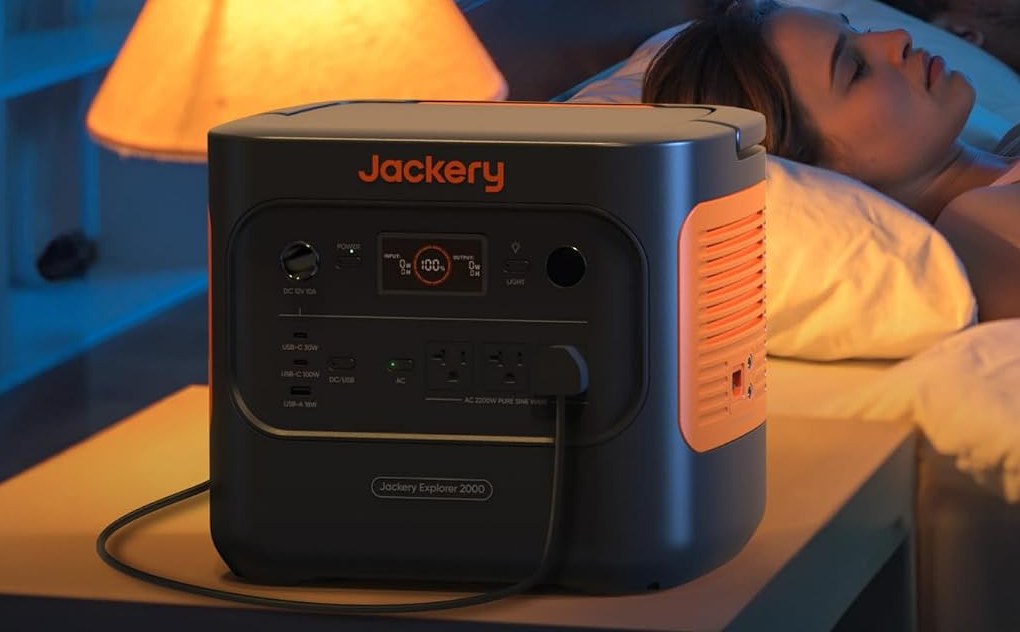
The step-up for households that have measured their outage and found the 1000-series short. 2042Wh runs a sump pump, a chest freezer and the networking drawer at the same time, and 2200W of AC output covers the surge of a well pump starting. This is also the unit the loudest complaint in the catalogue is about — see the capacity discussion below before you buy.
- 2042Wh / 2200W — sump pump + freezer + fridge simultaneously
- 2200W surge headroom — motor starts (pumps, compressors) without tripping
- expandable — pairs with Jackery expansion batteries if the outage math grows
- fast wall recharge — mostly full again in about 2 hours from a wall outlet
Why outage preppers, campers and homeowners buy different sizes
Three groups account for nearly all the reviews we read, and each one is solving a different equation. The unit is the same design; the watt-hour math is what changes.
Emergency preparedness — 292 to 1024Wh
Phones, a CPAP, the router, a few lights: that is a 100-400Wh night. The Explorer 300 at from $289.00 covers it with margin, and the review history — people who bought one after an ice storm, for a parent, “before they needed it” — is the largest in the catalogue by far. If your outage plan does not include a refrigerator, stop reading the bigger rungs and buy this one.
Refrigerator math — 1024 to 2042Wh
The moment a fridge enters the plan, watt-hours matter more than brand. A verified buyer ran a full-size fridge for nine hours on the 1070Wh kit — the concrete anchor number for this rung. Add a freezer and a sump pump and you are in 2000 v2 territory. The 1000 v2 + 200W panel kit at $879 is the single most rational purchase in the line-up for exactly this group.
Home backup — 3584Wh and up
Sump pump plus chest freezer plus well pump is a HomePower conversation, not an Explorer one. The HomePower 3600 Plus kit (3584Wh, 3600W) at $1,499 is the rung where 240V capability and transfer-switch installs start to matter. If you are pricing this rung, get an electrician quote before you buy the battery — the install shapes which model fits.
Watt-hours to runtime: the honest table
Convert your appliance list to watt-hours before choosing a rung. The middle column is the practical version of the whole review.
| Unit | What it honestly runs | Wrong for | From |
|---|---|---|---|
| Explorer 300 292Wh / 300W | Phones ×20, laptop ×4, CPAP 1-2 nights, router a full day | Any fridge, any motor with a compressor | $289.00 |
| Explorer 1000 v2 1024Wh / 1500W | Full fridge ~9 hrs (verified), lights + internet 2 days | Simultaneous fridge + freezer + pump | $559.00 |
| Explorer 2000 v2 2042Wh / 2200W | Fridge + freezer + sump pump together; motor surges | 240V appliances (well pump, central AC) | $999.00 |
| HomePower 3600 Plus 3584Wh / 3600W | Whole-essential-house; 240V on Pro Max variants | Carrying it anywhere — it is fixed backup | $1,875.59 |
Capacity, output and prices from Jackery’s official affiliate product feed and Amazon listings. Runtime figures combine manufacturer ratings with the reviewer-measured data points quoted below; treat them as planning figures, not guarantees, and derate for inverter loss (see FAQ).
When a Jackery is NOT the right pick
Do not buy it to run a whole house indefinitely. Even the 5040Wh Explorer 5000 Plus is a bridge, not a generator replacement. If your outage tolerance is a week and your list includes central air, a standby generator or the HomePower-plus-solar array is the correct tool, and a mid-size Explorer is an expensive compromise.
Do not buy the 300 for a refrigerator. 292Wh is under three hours of continuous fridge runtime. The single most common mismatch in the review history is buyers under-sizing into the cheapest rung and returning it. Do the watt-hour math first.
Do not trust nameplate watt-hours for planning. An electrical-engineer reviewer measured ~600Wh effective from a 2042Wh unit on a light load — inverter loss is real and load-dependent. Plan at 70-85% of nameplate and the disappointment disappears (see FAQ #3).
Do not skip the firmware update. Units ship on older firmware and at least one buyer spent an outage-week troubleshooting v1.0 behavior that v1.1 fixed. Update through the app before the storm season, not during the outage.
Do not deep-discharge it into storage. A 3-star reviewer’s 1000 v2 locked itself at a displayed 78% after low-voltage protection tripped. Store LiFePO4 packs half-charged and recharge them a couple of times a season — the battery you maintain is the battery that works during the outage.
What Amazon reviewers highlight
Spec sheets describe what a battery can store. Reviews describe what happens in the dark. The six below are paraphrased from verified Amazon reviews, with the reviewer’s name and stated setup kept so you can judge how close their situation is to yours. Three of the six are complaints, because the complaints are the useful part.
Delivered the day before a 30-hour outage hit the neighborhood. Kept the essentials running through the whole event — fridge, lights, phones — and the buyer’s takeaway was simply that they had it before they needed it. This is the specific purchase pattern worth copying: outage prep bought after the forecast, not during it.
Owns a 5000W gas Coleman generator that still works fine after 20 years — and still reaches for the Jackery when the power drops, because the sump pump needs to run without carrying a gas unit to the basement. For short outages the battery wins on the two things gas loses at: silence and zero fumes.
Ran a full-size fridge plus a freezer, phones and tablets off the 1000 v2 kit and reported it worked better than expected. Nine hours of refrigeration from one charge is the concrete number most outage buyers are actually asking for when they ask “is 1000Wh enough?” — for a fridge-only strategy, yes.
An electrical engineer measured roughly 600Wh of usable output against the 2042Wh rating on his load profile and called the unit overrated on that basis. The physics is real: every inverter wastes energy in conversion, and small loads at the low end of the range waste proportionally more. Plan on roughly 70-85% of nameplate for mixed household loads, and read this as the cost of not doing the watt-hour math before buying — not as a defect report.
Arrived on firmware v1.0 and needed the v1.1 update to behave correctly, and found Jackery’s update process poorly documented. The fix exists and works, but the friction is real. Practical rule: update the firmware through the app the week you buy the unit — before the outage, not during it.
Ran the battery down to the point the low-voltage protection locked it — the display still showed 78% but the unit refused to power on and needed a recovery procedure. The lesson is the one the manual underlines: LiFePO4 packs in storage-drain situations should be recharged well above empty, especially in storage between camping trips.
Review highlights are paraphrased, not quoted verbatim. Names and verification status are as published on Amazon. Star ratings shown are the reviewer’s own.
The three sizes in real setups
🔌 The night the power goes out
The 1000 v2 kit, charged ahead of storm season, fridge duty-cycled, router and phones on direct. A reviewer’s unit arrived the day before a 30-hour outage and covered the essentials end to end — that is this rung’s entire job, done once, quietly, with no gasoline in the garage.
🏕️ Camping and road trips
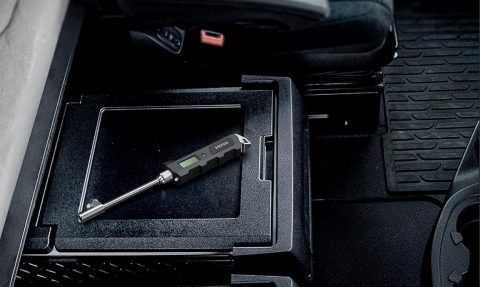
The 292Wh Explorer 300, in the footwell, powering a cooler fan, lanterns and device charging for a weekend. Reviewers who road-trip with the 300 consistently land on the same verdict: it is the right size to bring every time, which is the actual test — the bigger units stay home because carrying them is work.
🏠 Sump pump and basement duty
The 2000 v2, cycled for pump runs during a multi-hour outage. One reviewer retired his 20-year gas generator to backup-of-the-backup duty for exactly this reason: no fumes in the basement, no pull-cord at midnight, and enough surge headroom for the pump motor to start.
Frequently asked
Do I need the solar panel, or is the power station enough?
For a one-evening outage, the station alone is enough — the 1000 v2 charges from a wall outlet in about two hours. The panel earns its money on day two: the 1000 v2 + 200W kit at $879 tops the battery up from sun alone, which is the difference between a countdown and a sustainable loop. If your outage history is measured in hours, skip the panel; if it is measured in days, buy the kit.
How long will a Jackery run my refrigerator?
A modern full-size fridge draws 1-2 kWh per day in normal use. On the 1000 v2’s 1024Wh that is roughly 9 hours of continuous refrigeration — which is exactly what one verified buyer measured with this kit (“full size fridge charged for 9 hours”). The standard outage trick is duty-cycling: run the fridge a few hours, let the thermal mass hold the cold, and the same battery covers 2-3 days of food preservation instead of one.
Why did one reviewer measure only ~600Wh from a 2042Wh unit?
Inverter conversion loss. The 2042Wh figure is the battery’s DC storage; every watt that leaves the AC socket passes through an inverter that wastes energy as heat, and small AC loads waste proportionally more. The engineer who measured 600Wh was running a light load, where fixed overhead dominates. For mixed household loads expect roughly 70-85% of nameplate — budget in watt-hours accordingly and the number stops being a surprise.
Is a Jackery a good CPAP battery?
Yes, and it is one of the quietest ways to do it. A CPAP without the humidifier draws 15-40W, so the 292Wh Explorer 300 covers one to two nights; with the humidifier or heated tube, budget roughly double. The 300’s 11,379-rating review history is full of CPAP travellers for exactly this reason. One reviewer’s older unit stopped holding charge after nine months of CPAP duty — battery chemistry ages with deep cycling, so keep the firmware current and store it half-charged.
What is the difference between the Explorer and HomePower lines?
Watt-hours and voltage. The Explorer line (292-2042Wh) is portable 120V power for camping and short outages. The HomePower line is home-backup hardware: the HomePower 3600 Plus carries 3584Wh and 3600W of output, and the Pro Max variant does 240V, which is what well pumps and some central HVAC need. If your outage plan includes 240V appliances, that is the line to price — everyone else is fine with an Explorer.
Is this article a paid promotion?
No. It is affiliate-supported: if you buy through a link we earn a commission at no extra cost to you, and we also run the paid search campaigns that bring readers to this page. Jackery has not paid for this review, has not seen it before publication, and had no input into which units are recommended — or into the sections above that tell you when not to buy one.
Final thought
Jackery’s line-up is easier to buy than it looks once you replace “how many watts?” with “how many watt-hours does my outage actually cost?”. The brand wins on review depth — 11,000+ ratings on the smallest unit is a decade of field data — and on chemistry, with LiFePO4 across the current v2 line. It loses on pure capacity per dollar against some competitors, and it loses on 240V unless you step into the HomePower line.
Do the watt-hour math, buy one rung bigger than your honest estimate, update the firmware the week it arrives, and store it half-charged. That is the whole playbook.