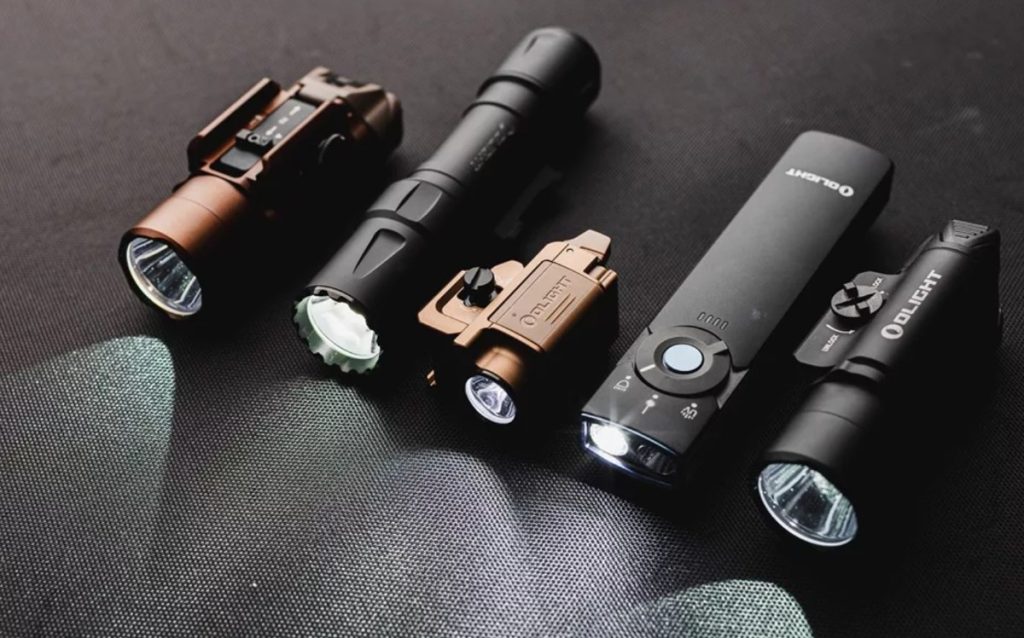

Quick answer: buy the job you actually do, not the lumen king. OLIGHT’s catalogue runs from a $12 keychain light to a 25,000-lumen Marauder, and the flagship is the wrong answer for almost everyone who searches for it. The line that actually earns its price for most buyers is the flat ArkPro family — pocket-sized, USB-C, spot plus flood — plus one weapon light for pistol owners. Match the light to the job below and the choice gets boring, which is the goal.
What the OLIGHT line-up actually is
OLIGHT’s catalogue looks like a hundred flashlights. It is really four tiers: the tiny I3T-class keychain lights (around $12-18, with the largest review histories in the catalogue), the flat ArkPro EDC family ($110-130), the tactical rail lights like the PL X ($120-150), and the flood monsters (Marauder class, $370 and up). Same build quality philosophy throughout — reviewers repeatedly compare the machining favorably to lights costing twice as much — with output and thermal management scaling with size.
Three products carry nearly all the purchase decisions, and they are not interchangeable.

OLIGHT ArkPro Ultra flat EDC (1,700 lm, UV + green laser)
The line’s volume product and the one the review history keeps re-buying: a flat, wedge-shaped EDC light that packs spotlight, flood, UV and a green laser into a body that slides into a front pocket beside a folding knife. One reviewer replaced a $350 SureFire Stiletto Pro with it as his work carry and stayed; another lost his on a fishing trip and bought the same model again instead of shopping around.
- 1,700 lm + 4 light types — spot, flood, UV and green laser in one body
- flat wedge form factor — carries like a knife clip, not a flashlight baton
- USB-C + magnetic charging — two ways to top up, no proprietary dock required
- 2,297 ratings at 4.7 — the deepest review history in the ArkPro line
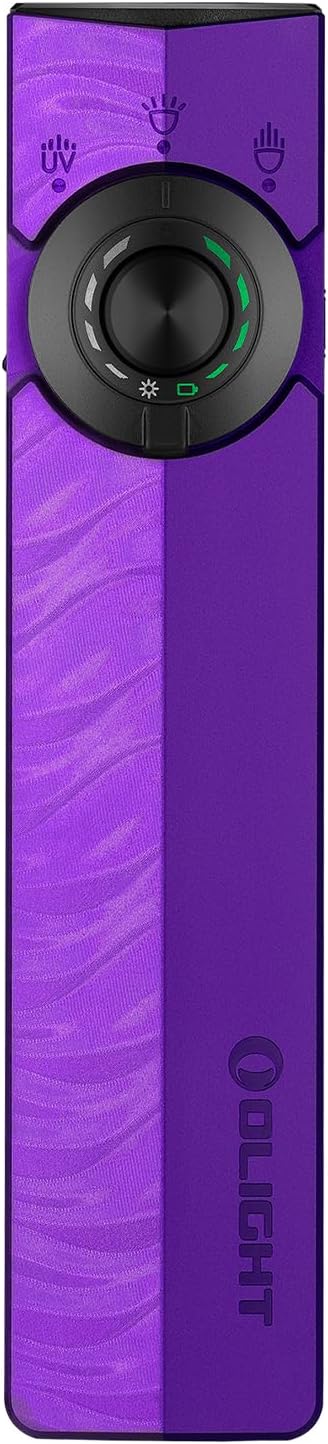
OLIGHT ArkPro flat EDC (spot + flood, no laser)
The Ultra’s sibling for people who want the same flat body and dual beams without paying for the laser and UV. Reviewers land on it for one recurring reason: the flood option — which the Ultra lacks — turns out to be the mode they use most, for close work, engine bays, and walking the dog. Same 200-meter-plus spotlight, same pocketable wedge, $20 less.
- spot + flood — the combination the Ultra skips — reviewers use flood constantly
- 1822 ratings at 4.8 — the highest rating in the flat EDC line
- rotary mode dial — one-handed mode changes without cycling through strobe
- USB-C — charges from the same cables as everything else you own

OLIGHT PL X GL weapon light (green beam combo)
The weapon-mounted member of the family: a compact rail light with a green laser combo that one reviewer ran through a defensive shooting class and described as feeling “like cheating” for point shooting. Zeroing is a straightforward alignment with an already-set red dot, the laser stays visible in daylight, and the body does not extend past the muzzle on compact pistols.
- green laser combo — visible in daylight, zeroed against your existing red dot
- compact footprint — does not extend past the barrel on compact pistols
- 169 ratings at 4.7 — tactical buyers repeat the same praise points
- USB-C rechargeable — no cell removal for routine charging
EDC carriers, tradespeople and pistol owners buy different lights
Three groups account for nearly all the reviews we read, and each one is solving a different problem.
Everyday carriers — the flat ArkPro body
The recurring theme in ArkPro reviews is the pocket argument: cylindrical 1,500-lumen lights print awkwardly and fight the knife clip for pocket space, while the flat wedge disappears. A reviewer who lost his first Ultra on a fishing trip bought the identical model again without shopping around — that repurchase behavior is the strongest signal in the catalogue.
Tradespeople — flood first, laser second
A welder running his light four hours a day and an electrician working in plenum spaces converge on the same needs: a real flood mode, a tail magnet for hands-free work, and a charge that lasts the shift. That profile leans toward the standard ArkPro at $109.99 — its dedicated floodlight is exactly the mode the Ultra drops, and the reviewers using it daily never mention missing the laser.
Pistol owners — the PL X GL
Weapon lights are a different buying conversation: footprint, zeroing, and daylight visibility. The PL X GL at $149.99 covers all three — compact enough to not extend past a compact pistol’s muzzle, simple to zero against an existing red dot, and with a green laser that survived a defensive shooting class with a positive verdict.
The honest table: job, light, price
Pick the row that matches the job before comparing any numbers.
| Light | Job it is honestly good at | Wrong for | Price |
|---|---|---|---|
| ArkPro Ultra 1,700 lm + laser + UV | All-in-one EDC; pointing things out; UV checks | Close work that needs a true flood mode | $129.99 |
| ArkPro spot + flood | Daily carry with real close-work lighting | Anyone who specifically wants the laser/UV toolkit | $109.99 |
| PL X GL weapon light + green beam | Rail-mounted pistol light, point shooting | General EDC — it is shaped for a trigger guard | $149.99 |
| Marauder 3 25,000 lm | Short-burst flood: search, property checks, showing off | Sustained turbo for more than a few minutes — it steps down hot | $369.99 |
Prices and ratings from OLIGHT’s official affiliate product feed and Amazon listings, at the time we last read them. Mode descriptions combine the product feed with reviewer-reported behavior below.
When OLIGHT is NOT the right pick
Do not buy the Marauder as a work light. A verified buyer’s two-star review says it plainly: sustained turbo overheats in 3-4 minutes. The light is honest about what it is — a short-burst flood instrument — but if your mental model is “max brightness for an hour”, this is the wrong category entirely.
Do not buy the Ultra if the floodlight is your main mode. The Ultra trades the dedicated flood for the laser and UV. A daily-use welder reviewer lists that absence as his main con. If flood-first describes you, the standard ArkPro is the better tool for $20 less.
Do not buy any premium OLIGHT for a glovebox drawer. A $12 I3T EOS covers drawer, bag and gift duty with a five-figure rating history behind it. The ArkPro tier earns its price only for daily pocket carry.
Do not expect the magnetic base to survive rough mounting. The same welder reviewer notes the magnet’s contact area is small enough that a sideways tap can knock the light loose. Great on a nightstand, marginal on a bouncing machine.
Do not treat weapon-light marketing as legal or tactical advice. A laser does not replace sight discipline or training, and local rules on carried firearms and lights vary. The PL X GL is well reviewed as hardware — the usage decisions stay yours.
What Amazon reviewers highlight
Spec sheets list modes. Reviews describe pockets, shifts and shooting classes. The six below are paraphrased from verified Amazon reviews, with the reviewer’s name and stated context kept so you can judge how close their situation is to yours. Two of the six are complaints, because the complaints are the useful part.
Ran a $350 SureFire Stiletto Pro as his EDC for years, lost it, and bought the ArkPro Ultra as a stopgap while he saved for the SureFire successor. The stopgap won: independent flood and spot control (he prefers a clean flood with no hotspot), a laser bright enough for pointing at machinery, and usable UV. He did not get SureFire-level everything — but the price gap bought his honesty about what he actually needs daily.
A welder who runs it roughly four hours a day, every day, on the job. The charge lasts his whole shift, the ergonomics get an A+, and the green laser is, in his word, phenomenal. The two cons are specific and worth reading before you buy: the magnetic base holds less area than he would like and can knock loose if tapped sideways, and — unlike its sibling — the Ultra has no dedicated floodlight mode.
A long-time Olight carrier calls the ArkPro possibly their masterpiece, and his reasoning is the form-factor argument in miniature: most 1,500-lumen lights are chunky cylinders that print awkwardly in a pocket, while the flat wedge slips in beside a knife clip without fighting for space. Over 200 meters of spot throw, a wide flood, and a rotary dial that makes mode changes one-handed.
A commercial foreman and electrician who works in dark plenum spaces and catwalks, carrying it daily just like his pocket knife. His verdict covers the things spec sheets skip: the selector switch and center button feel sturdy rather than plasticky, the magnet on the tail sticks to pipes and ductwork for hands-free work, and battery life is impressive for the size.
Ran the light/laser combo on his carry pistol through a defensive shooting class and reports the laser made point shooting feel intuitive without using the sights. Stays visible in daylight, charges simply, and zeroes by aligning the laser with an already-set red dot. His one complaint is niche: indoor shooting with a compensator can make the laser beam itself visible in the smoke.
The Marauder 3’s loudest complaint, in one line: it heats up fast on sustained turbo, though the reviewer concedes it is super bright while it does. This is thermal physics more than defect — a 25,000-lumen output cannot run continuously in that body — but the practical rule for buyers stands: buy the Marauder for short-burst flood, not for a work light you run on max for an hour.
Review highlights are paraphrased, not quoted verbatim. Names and verification status are as published on Amazon. Star ratings shown are the reviewer’s own.
The three lights in real setups
🧰 The four-hour shift
The standard ArkPro in a welder’s pocket: flood for close work, tail magnet stuck to whatever steel is nearby, charged over USB-C at lunch. It holds the whole shift — that is the daily-carry test most lights fail and this one passes, according to the person harshest on it.
🎒 The pocket that hates cylinders
The ArkPro Ultra beside a folding knife clip, its flat wedge invisible until needed. One reviewer’s test is the most relatable in the catalogue: he lost his first one in a lake and re-bought the exact model the same week — the definition of a tool that solved the carry problem.
🎯 The training class
The PL X GL on a carry pistol, laser zeroed to the existing red dot before a defensive shooting class. The reviewer’s verdict — point shooting felt intuitive, daylight visibility held, one niche indoor-range caveat — is as close to a field test as weapon-light reviews get.
Frequently asked
ArkPro or ArkPro Ultra — which one should I buy?
The difference is two features and $20: the Ultra at $129.99 adds a green laser and UV light; the standard ArkPro at $109.99 instead keeps a dedicated floodlight mode the Ultra drops. The review history leans practical: a welder who uses his Ultra daily still lists “no floodlight” as his main con, while standard-ArkPro reviewers cite the flood as the mode they use most. If you need the laser for pointing things out, buy the Ultra; if you mostly light up close work, the standard is the better tool for less.
Is the Marauder 3's overheating a defect?
No — it is physics, and the review that complains about it also calls it super bright. A 25,000-lumen turbo mode generates heat faster than any palm-sized body can shed it, so the light steps down to sustainable output after a few minutes. The design question is whether that trade fits you: the Marauder is a short-burst flood instrument for search and property checks. If you need sustained high output for long stretches, a larger handled light or area lighting is the honest answer.
Are OLIGHT batteries proprietary, and what is the magnetic charger about?
OLIGHT uses custom cells in several lines, which is why the brand’s magnetic charging puck exists. The ArkPro line reduces that friction: both the ArkPro and the Ultra charge over plain USB-C as well as the magnetic base, so a dead light is no longer a hunt for a special cable. The magnetic base itself is convenient on a dash or shelf — one daily-use reviewer’s only knock is that its contact area is small enough to knock loose if bumped sideways.
Is a green laser on a weapon light actually useful?
The review history says yes, with one specific use case: point shooting. A defensive-class student described aligning the laser with an already-zeroed red dot as a five-minute job, then finding intuitive hits without riding the sights. The caveats worth knowing: daylight visibility limits the laser’s pointing role, and indoor range smoke can make the beam itself visible. It is a training and aiming aid, not a substitute for sight discipline.
I just want a cheap pocket light — is OLIGHT still the answer?
Partly. The ArkPro line at $109.99+ is the brand’s flagship tier and overkill for a glovebox light. OLIGHT’s volume leader is actually the tiny I3T EOS at around $12-18, with a five-figure rating history — that is the one to buy for drawers, bags and gifts. The ArkPro tier earns its price only if the flat carry format and the spot/flood versatility solve a daily problem you actually have.
Is this article a paid promotion?
No. It is affiliate-supported: if you buy through a link we earn a commission at no extra cost to you, and we also run the paid search campaigns that bring readers to this page. OLIGHT has not paid for this review, has not seen it before publication, and had no input into which products are recommended — or into the sections above that tell you when not to buy.
Final thought
OLIGHT’s reputation rests on something rare at its price points: reviewers who own more expensive lights keep admitting, sometimes grudgingly, that the machining and the mode design are genuinely competitive. Its weaknesses are equally consistent — a floodlight missing where you wish it existed, magnetic bases that want gentle mounts, and a flagship whose thermal limits are physics, not secrets.
Buy for the job: the standard ArkPro for flood-first daily carry, the Ultra when the laser and UV earn their keep, the PL X GL for the rail, and the I3T for every drawer in the house. That is the whole playbook.