
Quick answer: Waterdrop’s lineup sorts by what’s actually in your water — so test first. The G3P800 tankless RO ($849.00) is the quantified contaminant killer: Phoenix tap at 400–600 TDS out at 28, pitcher-fills in seconds, and the best-named-rep support culture in the appliance aisle — with pumps that die past year two as the honest tax. The 15UA under-sink filter ($51.29) is the taste fix that keeps your minerals and won’t move a TDS meter, because it’s carbon, not RO. The Samsung-bay fridge filter ($16.99) is the 29,929-rating consumable: OEM fit at a third of the price. Buy the tier your water report demands.
The three-product lineup
RO, carbon, or consumable — the ladder of filtration depth. Prices are feed values at time of writing.

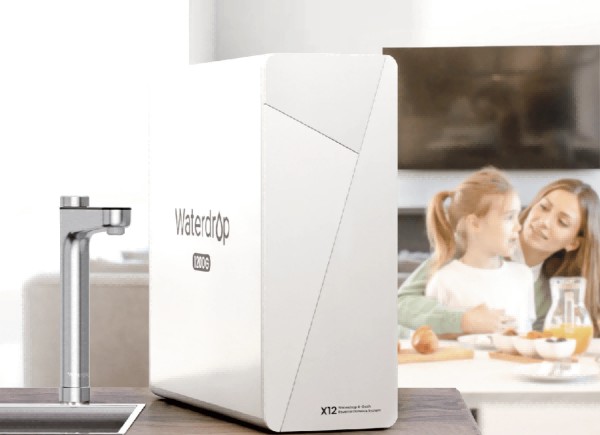
Waterdrop G3P800 tankless RO system
The serious machine: an 800-gallon-per-day tankless reverse-osmosis system with a TDS display, a booster pump, and optional remineralization. The pool’s results are quantified: Phoenix 400–600 TDS tap water processed to 28 TDS with the MNR35 remineralizer in line; a well-water owner watching his readout sit at 08–12 ppm for six months; tankless flow that fills a pitcher “in seconds” instead of draining a reservoir. The support story is unusually strong — owners name their reps (Hailey Z., Krystal) across warranty claims, out-of-warranty discounts, and even post-warranty replacements. The honest 3-star ledger: pumps that died just past the two-year mark, one dead-on-arrival E03 unit, a 40-second filter flush after every dispense that wastes about a quarter gallon, a plastic-mounted faucet that develops slow leaks, and filter costs that add up. It’s a $849 appliance with an honest cost of ownership.
- 800 GPD tankless flow — pitcher fills in seconds; no tank eating the cabinet
- TDS readout on the unit — owners watch 08–12 ppm on well water, 28 on Phoenix tap
- named-rep support culture — warranty and post-warranty resolutions documented by name
- quarter-gallon flush per dispense — 800-series design behavior — the 3-stars’ water-bill complaint

Waterdrop 15UA under-sink filter
The honest middle of the line: a single-stage under-sink carbon-block system that removes chlorine, taste, odor and sediment for up to 24,420 gallons or two years — and, crucially, leaves the minerals in. The 5-star pool is the product’s real story: three-year owners with warranty claims handled “quick and painless,” end of bottle-hauling, water their kids drink voluntarily, and a filter change that takes minutes with no wrenches. The 3-star physics is worth reading twice: this is not an RO system — one owner’s before/after test strips showed zero TDS change (carbon doesn’t remove dissolved solids), hard-water taste survived for another, and one nitrate scare (25 ppm test) sent a unit back. If your problem is chlorine and taste, this is the $51 fix; if your problem is what’s dissolved in the water, step up to the RO.
- 24,420-gallon / 2-year filter — the cost-per-gallon story that ends bottled water
- keeps healthy minerals — the taste-first design RO owners remineralize to recover
- wrench-free 3-minute changes — the documented anti-RO-system pitch
- does NOT change TDS — carbon, not RO — test your water before expecting contaminant removal

Waterdrop fridge filter (Samsung HAF-CIN/EXP replacement)
The quiet volume product of the whole catalog: a Samsung-compatible refrigerator filter with 29,929 ratings at 4.7 stars. The review pool is short and uniform for a reason — the product either fits and the ice clears up, or it doesn’t. This one fits: “perfect fit,” “no leaks,” “look like the Samsung filters and at a glance you’d never know the difference,” clear odor-free ice, chlorine smell gone from the dispenser line. At roughly a third of OEM pricing with identical fit and sealing, the pool’s only real question is how many to stock — the honest answer is whatever your fridge’s change light demands, on subscription.
- 29,929 ratings, 4.7 stars — the most stress-tested consumable in the line
- OEM-equivalent fit and seal — verified against Samsung originals by direct swappers
- clear, odor-free ice — the visible result owners actually report
- 18% category commission — the brand’s quiet repeat-purchase engine
Who each Waterdrop is for
The honest split is what’s actually in your water — which means the first purchase is a $15 test kit.
The contaminant worrier — G3P800 RO ($849.00)
High TDS, well water, PFAS-in-the-news anxiety, or a baby on formula. Quantified removal (400–600 down to 28 TDS), tankless flow, and a support culture that answers. Budget the quarter-gallon flushes, the filter costs, and the plug under the sink.
The taste fixer — 15UA under sink ($51.29)
Chlorine taste and odor, good municipal numbers, no interest in stripping minerals. The $51 carbon-block that ends bottle-hauling for years — bought knowing it won’t move your TDS reading, because it isn’t supposed to.
The fridge owner — replacement filter ($16.99)
Samsung bay, change light on, OEM price tag offending you. The 29,929-rating consumable: same fit, same seal, clear ice, a third of the price.
Side by side
Prices and ratings from the brand’s affiliate feed at time of writing.
| G3P800 RO | 15UA under sink | Fridge filter | |
|---|---|---|---|
| Removes | Dissolved solids, contaminants (RO) | Chlorine, taste, sediment | Chlorine, taste (fridge line) |
| Keeps minerals | No — remineralizer optional | Yes | Yes |
| Best documented win | Phoenix 400–600 → 28 TDS | Bottle-hauling ended, 3 years | 29,929-rating OEM swap |
| Documented weakness | Pumps die past year 2; flush waste | No TDS change (by design) | Fridge-specific, that’s it |
| Price | $849.00 | $51.29 | $16.99 |
| Rating history | 4.5 · 1,158 | 4.5 · 8,761 | 4.7 · 29,929 |
Not the right pick if… you haven’t tested your water. The entire lineup sorts by what’s actually dissolved in it — a $15 TDS meter and a county water report will tell you whether the $849 RO is doing work or theater. The pool’s own instrumented reviews (strip tests, shunts, TDS meters) are the buyers who got exactly what they expected.
Not the right pick if… you’re renting or can’t give up under-sink space and an outlet. The G3P800 needs a dedicated plug (the booster pump), a drain connection, and a faucet hole — one owner rewired his garbage disposal to free an outlet. Renters: the 15UA or a pitcher-class filter is the honest ceiling.
Not the right pick if… you expected set-and-forget appliances at the RO tier. The honest ledger from the 3-star pool: pumps that die at year two-plus, a quarter-gallon flush after every glass, plastic faucet mounts that develop slow leaks, filter subscriptions, and no cartridge recycling program. It’s the best-reviewed tankless RO at the price — and it’s still a maintained appliance, not a fixture.
Not the right pick if… your problem is hard-water scale or nitrates at the 15UA tier. Carbon doesn’t touch dissolved minerals — one owner’s strips showed zero change and her hard-water taste survived; another pulled his 15UA after a 25 ppm nitrate test scared him. For dissolved problems, RO or a softener; the $51 filter can’t do that job.
Not the right pick if… you’re buying the fridge filter for a non-Samsung bay. This SKU is the HAF-CIN/EXP fit specifically — check your fridge model against the compatibility list before stocking up, because the 29,929-rating pool is all one bay shape.
What verified buyers say
Six verified Amazon reviews, paraphrased and attributed — weighted toward the boundary-setting reviews this category needs most.
The quantified review the RO category needs: Phoenix municipal water at 400–600 TDS, processed to 28 — deliberately not lower, because the MNR35 remineralization filter puts back the minerals he wants. Fast dispense feeding the fridge and ice maker through the PMT tank, UV sterilization, easy install, and a Saturday email answered in five hours. The 3-star is for the flush cycle: the system self-cleans with filter wash after each use, which he counts as water waste against the spec sheet.
The honest ownership arc across the pool: first unit loved, bought a second for a beverage station, and then the failures arrive just past warranty — a pump making loud noises and dying, an E02 traced to a leaking pump, customer service answering one email a day during US night hours despite 24/7 claims. The resolution after public review pressure: a discounted replacement, then a full replacement shipped after back-and-forth, with the failed unit returned for inspection. “The attitude was good” is his edited verdict.
The bottle-hauling economy in full: years of 2.5-gallon jugs from the pharmacy because supermarket “purified” selection was thin, ended by a $51 under-sink install. Installation easy, water “super clean and great tasting” from the tap, and three years of ownership with two issues — both handled by named support reps (Becky most recently) with video-diagnosis and no-hassle replacement parts, one beyond expectation. The brand’s support culture, in one owner’s ledger.
The category-honesty review: 22 test strips before and after showed no significant difference, because a carbon block doesn’t remove dissolved solids — minerals and salts stay. His own framing is fair: with already-good municipal water, this is a taste-and-contaminant polish, not a purification step; the pressure drop was barely noticeable. The buyer’s education every under-sink listing should ship with.
The consumable’s whole job in one review: instead of overpaying for the Samsung OEM filter, he took the swap — and it maintains the same seal, filters equally well, and looks identical in the fridge bay. Ice clear, dispenser flowing, buying again. The 4.7-star mountain is built on exactly this review, twenty-nine thousand times.
The taste verdict from a chlorine-heavy supply: fridge water that previously carried the pool smell now reads as the best-tasting water in the house — enough that the family stopped buying anything at the store. Fits perfectly, swaps in minutes, price that makes the six-month change schedule painless to actually follow.
Three kitchens these products serve
The well or desert tap
Well water, Phoenix-class TDS, visible sediment, taste you can’t unnotice. The documented win: 08–12 ppm readouts, pitcher-fills-in-seconds flow, and the end of water-store runs.
The bottle-free conversion
Years of hauling 2.5-gallon jugs and recycling small plastic. The documented win: a $51 under-sink install, three years of tap water the family actually drinks, warranty support that answers by name.
The fridge with the amber light
Change-filter indicator on, OEM pricing at triple digits for a yearly set. The documented win: identical fit and seal at a third of the price, ice clear again, subscription set and forgotten.
FAQ
Do I actually need reverse osmosis?
Test first, buy second. If your TDS reads high (the pool’s RO buyers started at 400–600), your water is from a well, your county report flags specific contaminants, or taste problems survive carbon filtration — the G3P800’s quantified results (down to 08–28 ppm) are what the money buys. If your municipal water’s problem is chlorine taste and the report is clean, the 15UA’s own reviewers note carbon handles it — and one instrumented 3-star proved his strips read the same before and after. RO strips everything including minerals; make sure that’s the job you have.
What's the 15UA's actual lifetime cost?
The pool’s math: $51.29 up front, then a replacement cartridge roughly every 24,420 gallons or two years. One owner’s framing: at that price, replacing filters is cheaper than most competitors’ filters alone — and some owners just buy a whole new unit. Compare per-gallon against whatever you’re hauling from the store and the payback is usually weeks, not months. The honest caveat: if the cartridge stops flowing early, the documented cause is the back-pressure stop design — one owner drilled through the inlet stop and restored full flow, which is a warranty ticket, not a DIY ritual.
How real is the 'excellent customer support' claim?
Unusually real, and documented by name across the whole pool: Hailey Z. and Krystal on the RO side, Becky and Kimberly on the 15UA side — video-diagnosed warranty claims, replacement parts beyond the policy, out-of-warranty discounts, and post-review interventions that upgraded 1-star reviews to 3-star. The honest limits: response cadence is one email a day during US night hours despite 24/7 claims, and pump replacements past warranty took negotiation. For an appliance brand at these prices, the support culture is the genuine differentiator.
What does the tankless flow actually feel like?
The difference from reservoir RO: no storage tank draining — the pump pushes through on demand, and owners describe glass-fills in seconds and pressure that can splash out of the cup with the mini-tank installed. The honest counterweight is the 800-series’ automatic filter flush: about 40 seconds of self-cleaning after each dispense, roughly a quarter gallon of water, which one owner counted against his water bill. Fast water, with a waste line doing what waste lines do.
Why do owners add the remineralization filter?
Because RO removes everything, including the calcium and magnesium that make water taste like water. The pool’s Phoenix owner runs 400–600 TDS down to 28 specifically because the MNR35 puts minerals back — he wants them. If you’re used to distilled-tasting water or drink mostly through the fridge line, skip it; if straight RO tastes flat to you, it’s the $30-something fix the pool documents in line on the output.
How was this page put together?
We are an independent review site. Specs, prices and coupon states come from the brand’s official affiliate feed; review summaries are paraphrased from the public Amazon review history of each product, negative reviews included. If you buy through our links we may earn a commission — it does not change which reviews we quote or what they say.