
Quick answer: channel count is the number on the box; heat budget is the number that decides whether the camera is still recording in year three. The F7NP 4K two-channel ($169.99) is the value pick — 26,328 ratings at 4.1, and one owner’s footage reversed both a citation and an insurance denial — but the bundled card is too small for parking mode and more than one owner reports a two-year life. The F17 Elite three-channel ($239.98) adds a cabin camera and 128 GB, and has the only two documented heat shutdowns in this article. The 1200-yard rangefinder ($109.99) is a different job entirely: fine for club selection, two to three yards off between presses.
The three-product lineup
Two dash cams and a rangefinder. Prices are feed values at time of writing.

REDTIGER F7NP 4K dash cam
The volume product and the one with the deepest evidence: 26,328 ratings at 4.1, which is a point lower than the flagship and means the one-star reviews are not noise. The five-stars are mostly about evidence rather than hardware — one owner’s wife was cited for an accident the other driver caused, the footage reversed the ticket and then reversed the insurance decision. The one-stars are mostly about the card and the clock: the bundled card is small enough that parking mode fills it in a night, and more than one owner reports the camera dying inside two years with no warning. Read the distribution, not the average.
- evidence is the product — one owner’s footage overturned a citation and an insurance denial
- bundled card is too small — parking mode fills it fast; budget a 128-256 GB high-endurance card
- two-year lifespan reports — multiple owners describe a sudden death, not a slow decline
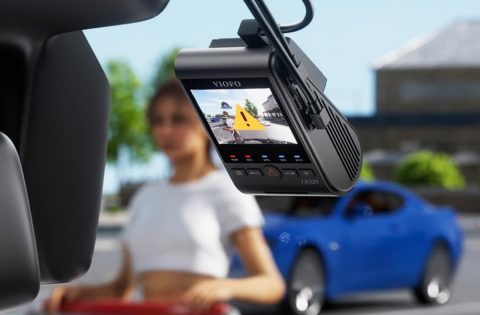
- front camera hides behind the mirror — owners repeatedly say it is small enough to disappear

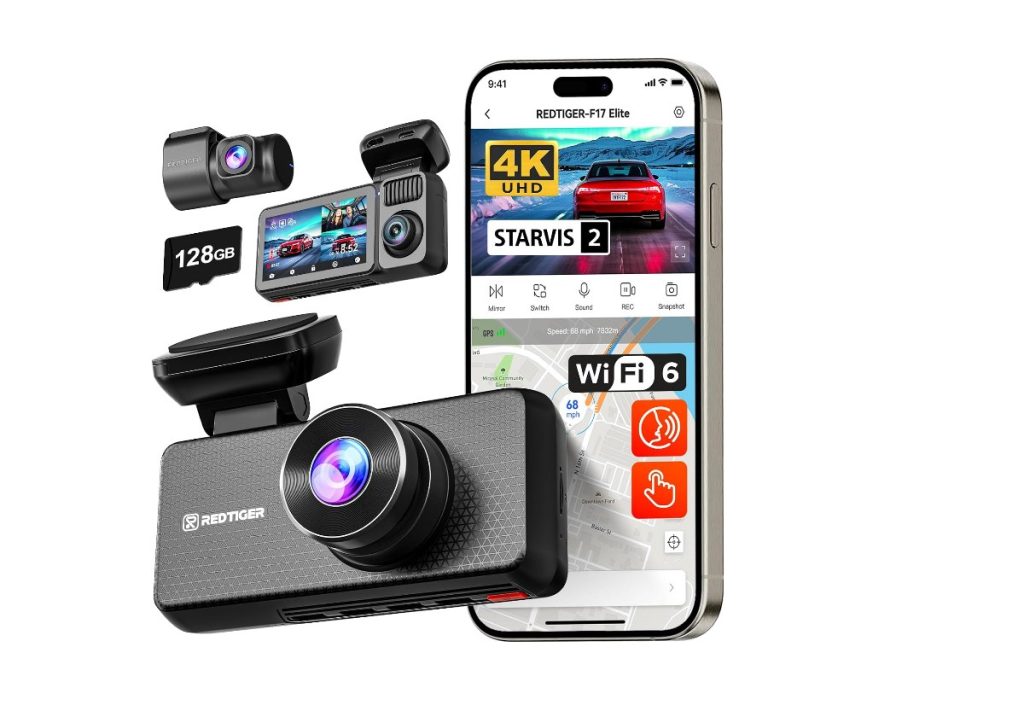
REDTIGER F17 Elite 3-channel
Three cameras, a 128 GB card in the box, and the one honest question about this product that the listing will not answer: what happens in a parked car in July. Owners answer it. One reports the unit shutting itself down in parking mode on hot days with the windows closed, and staying up once the air conditioning runs. Another had two units die within a day of installation in a New York summer and concluded heat was the cause. It is also the only camera here with a documented screen behaviour: the display blanks after three minutes and you cannot turn that off.
- parking mode overheats — two independent owners report shutdowns in summer heat
- 128 GB card included — enough to start; owners still buy a 512 GB for maximum retention
- screensaver cannot be disabled — the screen blanks after 3 minutes while still recording
- cabin camera for rideshare — a driver rates it the reason to buy for Uber or Lyft

REDTIGER 1200-yard golf rangefinder
A different product with the same underlying problem: the spec sheet says 1200 yards and 7x, and what owners argue about is repeatability. A one-year owner says he has to range the same flag three or four times and average in his head, because the reading moves two or three yards each press. A harsher reviewer puts the error at two to three yards normally and ten at worst, and describes a workaround — switch the unit to metres, range, switch back to yards — that resets it briefly. It is USB-C rechargeable, one owner has played weekly for eight months without charging, and the display is not backlit, which matters at dusk.
- 2-3 yard repeatability error — the recurring complaint; one owner averages 3-4 readings per shot
- not backlit — hard to read against a dark background or in low light
- USB-C, 8 months per charge — one weekly golfer has not recharged his yet
- magnet belt clip included — one owner’s magnet came off his bag on day two
The camera you need is decided by where it parks
All three of these record. What separates them is thermal headroom and card budget — the two things that decide whether a dash cam is still working in year three.
You want the cheapest camera with real evidence behind it — F7NP ($169.99)
26,328 ratings, front and rear, and a documented case of footage overturning a citation and an insurance denial. Comes with a card that is too small for parking mode, and more than one owner reports a two-year life.
You drive for a living, or your car bakes — F17 Elite ($239.98)
Three channels including a cabin camera, 128 GB in the box. It is also the only one here with two owners reporting heat shutdowns in parked cars — one of them losing two units in two days.
You want a number on the flag, not a video — rangefinder ($109.99)
A different job entirely. USB-C, slope, a magnet that one owner lost on day two, and a repeatability error of two to three yards that makes some owners average three presses per shot.
Side by side
Prices, ratings and rating counts from the brand’s affiliate feed at time of writing.
| F7NP 4K | F17 Elite 3CH | Rangefinder | |
|---|---|---|---|
| Price | $169.99 | $239.98 (was $349.99) | $109.99 (was $139.99) |
| Channels | Front 4K + rear | Front 4K + rear 2.5K + cabin 1080p | n/a — measures distance |
| Card in box | Small; owners upgrade | 128 GB included | n/a |
| Power | 12 V socket or hardwire kit | 12 V socket or hardwire kit | USB-C rechargeable |
| Best documented strength | Footage overturned a citation and a claim | Cabin channel for rideshare; 128 GB ready to record | Slope + magnet; 8 months per charge |
| Documented weakness | Card too small for parking mode; 2-year life reports | Heat shutdowns in parked cars; screensaver cannot be disabled | 2-3 yard repeatability error; unlit display |
| Rating history | 4.1 · 26,328 | 4.2 · 787 | 4.3 · 1,014 |
Not the right pick if… you plan to run parking mode in a hot climate and expect the camera to be live all night. Two independent owners describe the F17 Elite shutting down in a parked car in summer heat, one of them losing two units within two days. The other owner’s finding is the useful one: it stays up when the air conditioning runs. That is a thermal budget, not a defect, and it applies to every three-channel camera at this price. If you are in Arizona, Texas or Florida and parking mode is the reason you are buying, budget for a camera that will protect itself, and accept that a summer afternoon is not a covered window.
Not the right pick if… the bundled card is what sold you. On the F7NP it is small enough that a single night of parking mode can fill it — one one-star is essentially about that and nothing else. On the F17 Elite the 128 GB is better but owners still buy 512 GB for retention. Dash cams overwrite the oldest file, so a small card does not fail loudly; it fails by not having the twelve seconds you needed. Budget a high-endurance 128-256 GB card in the same order as the camera, and buy the endurance version rather than the cheap one.
Not the right pick if… you want the screen to stay on. On the F17 Elite there is no way to disable the screensaver: the display blanks after a maximum of three minutes while the camera keeps recording. A four-star owner is explicit about it, and about a second limitation — events, photos and sound are controlled all-or-nothing across the three channels, not per camera. If you use the screen to confirm the unit is live before a shift, this will annoy you every single time.
Not the right pick if… you need a first-press distance you can trust. The rangefinder’s own reviewers put the error at two to three yards, with one long-term owner describing ten at worst and a workaround involving switching the display to metres and back. Another says the zoom is strong enough that an unsteady hand produces errors of twenty yards. This is a $110 device being compared by its owners to $400-600 units, and it is not one of those. Buy it to know which club, not which yard.
Not the right pick if… you want a documented five-year relationship. The most useful three-star in this article is from an owner whose F7NP worked perfectly and then died without warning inside two years — he had read the same warnings before buying and discounted them. Dash cams live on a hot windscreen in direct sun, and this class of hardware has a finite life. Buy it as a two-to-three-year consumable, keep the receipt, and check whether your card issuer extends the warranty.
What verified buyers say
Six verified Amazon reviews, paraphrased and attributed — the citation that got reversed, a two-year death with no warning, two heat shutdowns, a screensaver you cannot stop, and a rangefinder’s measured error.
The review that explains why people buy these at all — and the most concrete outcome in the pool. His wife was in an accident that totalled her vehicle. The other driver told police she caused it, and the officer was going to cite her. She showed the video; the officer reversed course and cited the other party. The other party then lied to their insurer, and the footage settled that too. He has owned the camera eighteen months. Note what the review is not about: no claims about sensor size or bitrate. The camera’s job is to be running and to have the file when someone disputes the facts, and by that measure this $170 box paid for itself many times over.
The most important three-star here, because it is not a complaint about features. He rates installation and daily use highly, wishes for a bigger card and calls that his own preference rather than a fault. Then the failure: the camera stopped working entirely after roughly two years, without a warning, a corrupted-file phase or a degraded-image phase — it simply stopped. He notes other owners said the same thing before he bought, and that he discounted it. His conclusion is that a two-year life is disappointing but not unusual for consumer electronics. If you are budgeting, budget a replacement, or buy an extended plan.
A five-star review that contains the single most useful engineering fact about this camera. He installed it himself, rates the adhesive mounts and the spare mounts highly, and then describes the behaviour precisely: windows closed, car off, camera in parking mode, summer heat — it shuts itself down. Run the air conditioning and it stays up. His recommendation is to switch it off when the car is at home. That is not a defect being hidden; it is a thermal limit being described accurately, and it tells you the parking-mode runtime in a hot climate is shorter than the box implies.
The counterweight, and the reason the 4.2 average is worth reading carefully. The first unit worked, then stopped completely. He returned it, installed the replacement, and it worked — until the next morning, when it was dead again. He checked the cabling, re-verified the installation, brought the camera indoors to test it in isolation, and could not get it to power on. His own conclusion is heat in a New York summer. He ends with the question that matters: if that is the cause, what is the point of buying a camera that cannot survive the climate it is sold in. One report, but it is the second heat-related failure in this pool.
He raised his rating after the company contacted him, and he is explicit about why: the customer service is genuinely good, which is the pattern across REDTIGER reviews. The product complaint is narrow and real. There is no way to disable the screensaver, so the display blanks after a maximum of three minutes while the camera keeps recording — annoying if you use the screen to confirm it is live. He also says independent camera control is limited to on and off: events, photos and sound are all-or-nothing across the three channels. He kept the camera. Read this as the fair-minded four-star the flagship actually deserves.
The most technical review of the rangefinder and the one that tells you what “1200 yards” actually buys. His measurement: normally two to three yards off, sometimes ten. He found a workaround — switch the display to metres, take a few readings, switch back to yards — which restores accuracy briefly before it drifts again by the next hole. He also says it would not work for archery hunting. He gave three stars rather than one because it does function and the price is low. If you need a number you can trust on the first press, this is not that device; if you need a number within a club, it is.
Three vehicles these were built for
The car that was in someone else’s accident
Police report says one thing, the other driver says another, and your insurer is deciding. The documented win: eighteen months of footage that reversed a citation on the roadside and then reversed an insurance denial — from a camera that cost $170.
The rideshare shift with strangers in the back
Front, rear and cabin, all recording separately, with 128 GB in the box. The documented win: a driver who rates the cabin channel as the reason to buy for Uber or Lyft — and a heat caveat that applies to every camera in this class.
The Sunday four-ball where nobody agrees on the yardage
Slope, a magnet for the cart frame, and USB-C charging that lasts months. The documented win: eight months of weekly play without a recharge on one owner’s unit — and a repeatability error you should know about before you trust the first number.
FAQ
F7NP or F17 Elite – is the third camera worth $70 more?
It is worth it if you carry passengers you do not know. The F7NP at $169.99 covers front and rear with 26,328 ratings behind it, and its documented win – footage that overturned a citation and an insurance denial – came from a two-channel setup. The F17 Elite at $239.98 adds a cabin camera, a 128 GB card in the box and a touchscreen, which a rideshare driver in the reviews calls the reason to buy. Against that: the F17 sample is 787 ratings rather than 26,328, and it is the model with two independent reports of heat shutdowns in parked cars. For a private car, buy the F7NP and a good card. For a commercial car, buy the F17.
Does parking mode actually work in summer heat?
It works until the camera decides it is too hot, and then it protects itself by shutting down. That is the honest answer from two owners of the F17 Elite: one describes the unit shutting off in a parked car with the windows closed on hot days and staying up once the air conditioning runs; the other had two units fail within a day in a New York summer. Neither is describing a broken product – they are describing a thermal limit. If parking mode is central to why you are buying, mount the camera out of direct sun where possible, use the hardwire kit so it is not fighting the socket, and expect shorter runtimes in July than in April.
How big a memory card do I need?
Bigger than the box gives you, on the F7NP. A single night of parking mode can fill the bundled card, which is the substance of one of its one-star reviews. The F17 Elite ships with 128 GB and owners still buy 512 GB for retention. The reason this matters more than it sounds: dash cams overwrite the oldest footage, so a card that is too small does not fail visibly – it quietly deletes the twelve seconds you needed. Buy a high-endurance card (the ones rated for continuous write), 128 GB minimum, 256 GB if you use parking mode, and format it in the camera rather than on your computer.
Is the rangefinder accurate enough for scoring?
For club selection, yes; for a number you would bet on, no. The most detailed review measures two to three yards of variation between presses on the same flag, with ten at worst, and describes a workaround – switch to metres, range a few times, switch back – that resets it briefly. A one-year owner says he ranges three or four times and averages in his head. Another says the zoom is strong enough that an unsteady hand produces twenty-yard errors. Given that most golfers need front, middle and back to within about five yards, it does the job; if you are comparing it to a $500 unit, do not.
Will the rangefinder work for hunting?
One owner who tried it for both says no, specifically for archery – the same review that measures the two-to-three-yard error says it would not work for that use. The display is not backlit, which is a second limitation at dawn and dusk when hunting actually happens; a three-star reviewer calls that out directly. For golf in daylight it is fine. For low light or for range-finding an animal at unknown distance, this is the wrong tool and the reviews say so before you buy it.
How was this page put together?
We are an independent review site. Specs, prices and coupon states come from the brand’s official affiliate feed; review summaries are paraphrased from the public Amazon review history of each product, negative reviews included. If you buy through our links we may earn a commission – it does not change which reviews we quote or what they say.