
Quick answer: this brand’s reviews make the same argument three times in three product categories — the shape is the feature, and the spec sheet is table stakes. The Picogo AM52 ($63.99) is October’s converter: a 0.6-inch magnetic bank whose built-in 45W USB-C cable doubled as the lifeline when one owner’s wireless coil died at six months. The Blade 100W ($62.99) wins because it is flat — one owner owns three, another concedes it does not fit a pocket and explains why that does not matter. The Bowie MC2 ($49.99) clips onto the ear instead of sealing it, and reviewers say it never pinches. The documented failures are the mirror image: a Blade that died at fourteen months, a mic that others hear as grainy, and buds that need a wiggle to seat in their case.
The three-product lineup
All three products converted real October commissions, and the AM52 did it at the feed’s best rate — 20%. Each is the shape winner of its category in this brand’s 392-product US feed.

Baseus Picogo AM52 MagSafe power bank, Qi2.2 25W, 10,000mAh
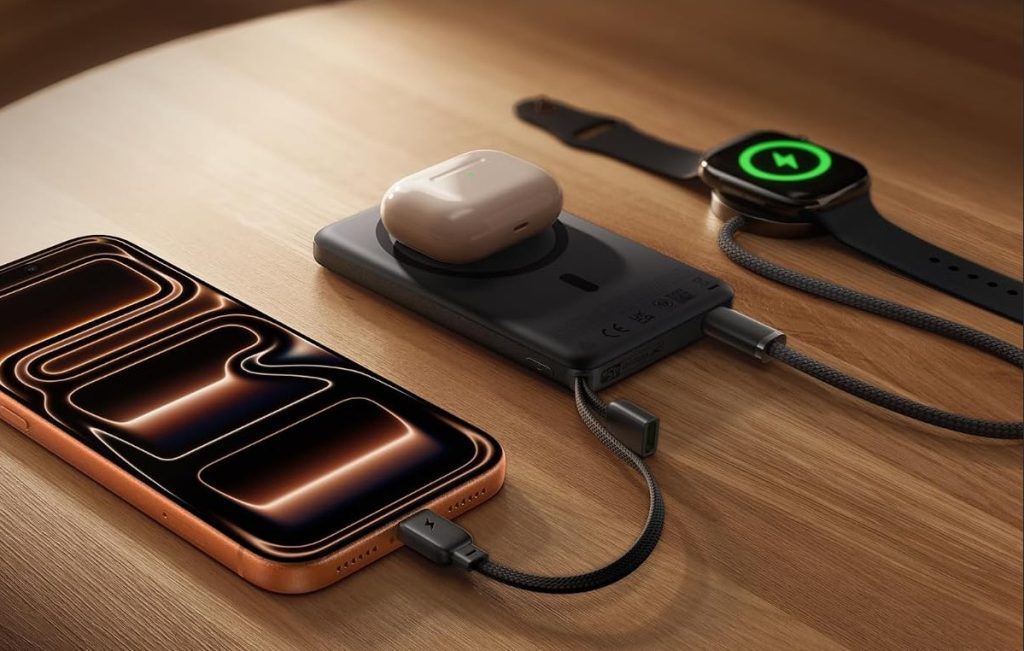
The October converter, at this feed’s best commission rate, and the magnetic power bank with one genuinely unusual trick: a 45W USB-C cable built into the body, doubling as a carry strap. That cable is not a gadget flourish — it is the reason one owner’s dead wireless charging did not become a dead power bank, and it out-charges the magnet at 45W versus 25W. The Qi2.2 certification delivers the full 25W only to iPhone 16 and 17; iPhone 12-15 cap at 15W and every Android needs a magnetic case to hold while carried. The thermal engineering is published: an NTC chip with a graphene and aluminum shell keeps the surface under 97°F, and owners confirm it stays cool except in a hot pocket.
- built-in 45W USB-C cable — the backup path that keeps working when the wireless coil does not — and doubles as the strap
- Qi2.2 certified 25W wireless — full speed needs iPhone 16/17; iPhone 12-15 get 15W, Android needs a magnetic case
- under 97°F surface claim — NTC chip + graphene + aluminum; owners report cool operation except in hot pockets
- 10,000mAh, flight-legal — TSA-friendly capacity with a display, magnetically slim at 0.6 inches

Baseus Blade laptop power bank, 100W PD, 20,000mAh
The travel machine, and the clearest example of this brand winning on shape. Four ports (two USB-C, two USB-A) with 100W USB-C PD that charges a MacBook Pro to half in thirty minutes, and a real-time display showing output wattage, remaining percentage, and how long until both the device and the bank itself are full. The body is flat — not pocket-sized, and the reviews are refreshingly honest about that — but slim enough to slide into a laptop sleeve where brick-shaped competitors do not. One owner owns three. The documented costs: about three hours to recharge, faster drain than expected when feeding a laptop and a phone together, and no built-in cable or carrying case.
- 100W PD, MacBook 50% in 30 min — full-speed laptop charging from a bank this flat
- real-time display — wattage, remaining percent, time-to-full for device and bank — owners single it out
- flat, not pocket-sized — the honest trade: it wins in bags and sleeves, not pockets
- no built-in cable, no case — the two things four-star owners asked for at this price

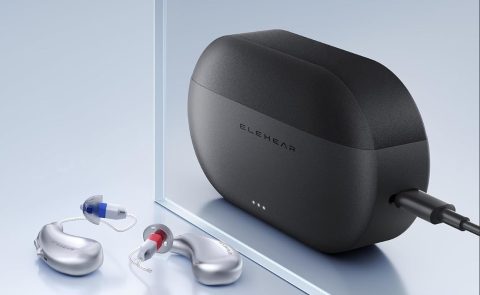
Baseus Bowie MC2 open-ear clip-on earbuds
The shape story continued into audio: instead of sealing the ear canal, the MC2 clips onto the outer ear with a memory-titanium C-ring and an air-cushioned wrap, at 5.1 grams per bud. The reviews are near-unanimous that it does not pinch — the complaint every other clip-on earns — and that all-day wear leaves no soreness. The spec side is real too: LDAC hi-res, Bluetooth 6.0, IP67, four beamforming mics, 11.5 hours per charge and 55 with the case. The documented weaknesses are equally specific: mic audio carries graininess on calls, and the buds do not always seat cleanly in their case, needing a wiggle and an app check to confirm connection.
- clip-on, not in-ear — open ear canal for awareness; no pressure, no soreness — the documented comfort win
- LDAC + Bluetooth 6.0 — hi-res codec with up to 3x the detail of SBC on supporting phones
- IP67 + 55-hour case — sweat and rain rated; weekly charging per one owner
- mic graininess, case seating — the two documented annoyances — calls are fine but not flattering; buds need a wiggle in the case
Which shape, for which carry
Baseus’ October money came from three shapes — a slim magnetic bank, a flat laptop bank, and a clip-on earbud — and the reviews agree on the principle: buy the physical form your day actually has, because the wattage numbers are table stakes across this whole price range.
The phone-in-pocket day — Picogo AM52 ($63.99)
Magnetic 25W on iPhone 16/17, a built-in 45W USB-C cable that doubles as the strap and saves you when the coil fails, thermals held under 97°F. Android users need a magnetic case for carry; the port works regardless.
The laptop-and-airport day — Blade 100W ($62.99)
Four ports, real-time wattage display, flat enough for the laptop sleeve. Documented costs: three hours to recharge, faster drain with laptop-plus-phone, no cable or case included.
The all-day-ears problem — Bowie MC2 ($49.99)
Clip-on comfort without the pinch, IP67, 55 hours with the case. Documented costs: grainy mic audio on calls, and buds that sometimes need a wiggle to seat in the case.
Side by side
Prices, ratings and rating counts from the brand’s affiliate feed at time of writing.
| Picogo AM52 | Blade 100W | Bowie MC2 | |
|---|---|---|---|
| Price | $63.99 (was $79.99) | $62.99 (was $89.99) | $49.99 (was $79.99) |
| Shape bet | 0.6-inch magnetic slab + strap-cable | Flat laptop-slate, 4 ports | 5.1 g clip-on C-ring |
| Core spec | Qi2.2 25W wireless / 45W wired, 10,000mAh | 100W PD, 20,000mAh, 2C+2A | LDAC, BT 6.0, IP67, 55 h |
| Display / feedback | LED battery indicators | Real-time wattage + time-to-full | App-based status |
| Documented win | Cool thermals; USB-C saved a dead coil; CS replaced in a week | Backpack portability; one owner bought three | No pinching, all-day wear, huge range |
| Documented weakness | 15W cap on iPhone 12-15; Android needs magnetic case; coil failure happened | No cable or case; ~3 h recharge; drain runs fast under laptop load | Grainy mic; case seating needs a wiggle |
| Rating history | 4.4 · 773 | 4.4 · 481 | 4.3 · 1,040 |
Not the right pick if… you are an Android user who wants the AM52 to stick while carried. The reviews agree the magnet holds beautifully on MagSafe iPhones and bare phones — and that on a Pixel or Samsung without a magnetic case, it charges fine on a table but will not stay attached in a pocket or a hand. One owner’s household split proved it: her iPhone held, his Android needed the port. If wireless carry is the whole point and your phone is not MagSafe, budget for a magnetic case or buy a cable-first bank instead.
Not the right pick if… you expect an iPhone 12-15 to charge at the headline wattage. The listing states it plainly and the reviews confirm it: Qi2.2’s 25W wireless is for iPhone 16 and 17; the 12-15 generation caps at 15W wireless no matter what the bank can deliver. The built-in USB-C cable at 45W is actually the faster path for those phones. The headline number is a phone generation gate, not a bank spec.
Not the right pick if… you need accessories included. Two of the three four-and-five-star Blade owners asked for the same missing items: a carrying case and a built-in cable. The Blade ships with neither — its flat shape is the accessory. The AM52’s cable is built in precisely because the brand knows the failure mode; the Blade asks you to pack your own. Price the pouch and the cable into the comparison against banks that bundle them.
Not the right pick if… your power bank will live beyond a warranty you do not read. The one-star on this page is a bank that became a brick at about fourteen months — inside the 24-month window the Blade listing promises, though the owner does not report a claim outcome. His pre-failure observation is the useful part: drain to 66% on a 3,500 mAh phone is worse conversion than the marketing implies. Verify your unit’s display, drain and recharge in the first weeks while the window is fresh.
Not the right pick if… you take calls all day on the MC2. The mic is the one metric that two separate reviewers docked: a four-star calls the audio grainy for the people on the other end, and the three-star downgrade review has no mic complaint but documents case seating that needs a wiggle and an app check nightly. For podcasts, gym audio and music the MC2 is excellent. For a workday of calls, compare up.
What verified buyers say
Six verified Amazon reviews, paraphrased and attributed — the backpack-portability argument, the owner who bought three, the six-month coil death that the built-in cable and a one-week warranty replacement absorbed, the fourteen-month brick with the drain oddity, the grainy mic, and the case-seating downgrade.
He compares it directly against the chunky high-output competition and concedes what the listing will not: this is not particularly small, and it does not fit in your pocket — but neither do the others, if we are honest. Where the Blade wins is the flat profile in a backpack: no bulk, a pocket it disappears into, no issues at security. He carried it daily on work travel, powered multiple computers off it, and notes that Baseus has been growing on him as a brand. This is the review that states the buying principle for the whole page: the shape is the feature, the wattage is the table stakes.
The most instructive ownership arc on the page. He bought the AM52 in July, used it nearly six months with no issues — stand-in work depends on a charged phone — and then the wireless charging stopped while the USB-C port kept working. Had the bank been wireless-only, that would have been a dead battery. Instead the built-in port carried him, he emailed support, and within a week a replacement had shipped and arrived. His verdict: excellent, fast, reliable service that honored the guarantee. Read the two halves together — the coil failed and the design and the company absorbed the failure.
The single most convincing ownership stat on the page: the only 100W bank he could find that fits almost anywhere, including a pocket, low-profile enough not to be annoying — and he owns three. His notes are practical: about three hours to a full recharge, four ports feeding several devices at once, indispensable for laptop travel. Pair this with the four-star next to it asking for a carrying case and a built-in cable, and you have the complete picture of the Blade: the shape and the power are worth replicating three times over, and the accessories are what you supply yourself.
The failure review, and its numbers deserve attention. His bank died completely — no charging, no screen — about fourteen months after purchase. Before that, he noticed that charging his Samsung (3,500 mAh battery) drained the 20,000 mAh bank to about 66%, where his math expected 75% or more — which is consistent with real-world conversion losses being larger than marketing suggests, plus possible degradation in the final months. One data point, and inside the 24-month warranty window the listing promises, though he does not report a warranty outcome. The practical takeaway: cycle-count the bank early, confirm the display and the drain curve in the first month, and keep the receipt handy.
She switched from first-gen AirPods and systematically tested what matters: stability (whipped her head around — they stay), battery (calls it insane), and range — she left her phone at work and the buds held connection all the way to her car. Audio is comparable to her old AirPods. The one point docked: the mic. Call quality is fine on her end, but others hear graininess in her voice. Her bottom line is the value frame this page keeps finding — for the price, genuinely some of the best headphones outside the main-name brands. If you take constant calls, the mic is the reason to compare up; for music and podcasts, it is not.
The downgrade review, updated over months. Everything he originally praised held — comfort that makes him forget they are on, better than the MC1 predecessor, battery that survives sleeping in them five or six hours and still has half a charge, case that rarely drops below 80-90% with daily use. What wore him down is specific and worth knowing before buying: the buds do not seat cleanly in the case. There is play in the drop-in, he has to open the app to see which bud is not connected, and wiggling them until contact is made is a nightly friction. He cleaned the contacts; it did not help. A comfort-first design with one mechanical detail that did not get the same attention.
Three days these shapes were made for
The commute with no cable in the pocket
The AM52 snapped on the back of an iPhone, charging through the case, thermals under 97°F, the strap-cable tucked away for the laptop or the second device. The documented six-month arc — coil died, port carried, replacement shipped within a week — is the reason this bank earns its commission rate.
The airport day with a MacBook
The Blade flat in the laptop sleeve, four ports feeding computer, phone, tablet and headphones, the display showing exactly how long everything needs. Security had no questions. Three hours to refill at the hotel — plan it overnight — and pack your own pouch and cable, because the shape is the only accessory included.
The yard-work afternoon
The MC2 clipped on, ear canals open for the doorbell and the delivery driver, IP67 against sweat and sprinklers, battery measured in days rather than hours. The documented price of that comfort is a mic that others hear as grainy — fine for a podcast between chores, budget up if the afternoon is a conference call.
FAQ
Why does the built-in USB-C cable matter so much on the AM52?
Because it is the failure path. The documented ownership arc on this page: the wireless coil stopped working at six months, and the owner’s bank stayed useful because the built-in 45W USB-C cable kept charging his phone — then support shipped a replacement within a week. The cable is also the faster path (45W wired vs 25W wireless) and it doubles as the carry strap, so it cannot be left behind. No other bank at this price combines the magnet with a wired backup that lives in the body.
Will the AM52 charge my phone at 25W?
Only if the phone supports it. Qi2.2’s 25W wireless applies to iPhone 16 and 17; iPhone 12-15 cap at 15W wireless regardless of the bank’s capability, and Android phones need a magnetic case to hold while carried — charging on a table works without one. The built-in USB-C cable delivers 45W to anything that accepts USB-C PD, which is why the wired path is the honest fast charge on this bank.
Is the Blade really pocket-sized?
No, and the best review on the page says so directly: it is not particularly small and it does not fit in a pocket — but neither do the other 20,000mAh laptop banks, and this one is flat enough to slide into a laptop sleeve or a backpack pocket where brick-shaped competitors bulge. The owner who bought three of them calls it the only 100W bank that fits almost anywhere. The honest framing: bag portability, not pocket portability.
What is the catch with the Bowie MC2's call quality?
The microphone. A four-star owner who praised the stability, the range and the battery docks one point specifically for graininess that other people hear in her voice; calls are usable, just not flattering. For music, podcasts and gym use the MC2 is the comfort pick — clip-on with no pinching, IP67, 55 hours of case battery. If your day is back-to-back calls, the four beamforming mics help with background noise but the graininess complaint stands.
How long do Baseus power banks last?
The honest range on this page: one owner’s AM52 needed a wireless-coil replacement at six months (covered, replaced in a week), and one Blade died completely at about fourteen months — inside the 24-month warranty window, though no claim outcome was reported. Against that, an owner owns three Blades and another has run a Baseus bank through daily work travel. The practical advice from the failure review: verify display, drain and recharge behavior in the first month, and keep the receipt.
How was this page put together?
We are an independent review site. Specs, prices and coupon states come from the brand’s official affiliate feed at the time of writing; ratings are the public Amazon rating history of each parent product. Review summaries are paraphrased from verified Amazon customer reviews of the products above, one-star and three-star included — every quotation is attributed to the reviewer name shown and the month it was posted. If you buy through our links we may earn a commission; it does not change which reviews we quote or what they say.